
From argument to accord in ancient debates

SONG CHEN/CHINA DAILY
The rhetorical traditions of ancient China and ancient Greece are among the most influential systems of communication in world history. Although both cultures developed sophisticated theories of persuasion during the same periods in history, they differed significantly because they emerged from distinct philosophical, social and cosmological assumptions.
The study of Pre-Qin (221-206 BC) rhetoric of Wei Yongkang, a scholar from the University of Texas Rio Grande Valley, identifies three defining features: harmony, self-effacement and paradox.
These characteristics contrast sharply with the argumentative, individualistic and logical orientation of Greek rhetoric associated with Aristotle, Plato and later Roman theorists such as Quintilian.
A major difference between the two traditions concerns the purpose of discourse. Greek rhetoric was fundamentally agonistic, developing within democratic city-states where public debate, legal disputes and political competition shaped civic life.
Aristotle defined rhetoric as the ability to discover the available means of persuasion in any situation, emphasizing effectiveness, argumentation and intellectual victory.
Pre-Qin Chinese rhetoric, by contrast, sought primarily to preserve harmony rather than to win debates. It focused on expressing one's position without creating disruption or social conflict.
Rooted in Confucian and Daoist thought, communication was understood as part of a broader ethical and cosmic order. The rhetor's task was therefore not simply to persuade but also to maintain proper social relationships and align discourse with the Dao.
These differing aims produced contrasting ideals of the speaker. Greek rhetoric elevated the individual rhetor, stressing visible authority, confidence and personal distinction. Aristotle's concept of ethos emphasized the persuasive force of character, while Roman rhetoric celebrated the eloquent statesman. Public speaking in the Greco-Roman world was often performative and self-assertive.
Chinese rhetoric instead cultivated humility and restraint. Wei describes this quality as "self-effacement", with the speakers avoiding overt self-assertion and minimizing the intrusion of personal ego into the discourse. Scholars such as Geoffrey E. R. Lloyd have contrasted the "agonistic Greeks" with the "irenic Chinese".
Whereas Greek and Roman rhetoric encouraged individual advancement, Chinese rhetoric prioritized social harmony and collective stability. Legitimacy depended less on originality than on alignment with accepted moral and cosmological principles.
The distinction also appears in rhetorical structure. Greco-Roman rhetoric generally favored deductive organization: a thesis was stated clearly and supported through systematic argument. This reflected the Greek commitment to analytical reasoning and logical progression.
Chinese rhetoric, on the other hand, was indirect and inductive. Ideas emerged gradually, and their meaning depended heavily on context, implication and shared cultural assumptions.
Direct confrontation risked damaging social harmony, so the discourse tended to appear subtle, elliptical, or understated from a Western perspective.
The philosophical foundations of the two traditions also diverged. Greek rhetoric developed alongside formal logic and philosophical inquiry. Thinkers from the Sophists to Aristotle explored questions of truth, reason and epistemology, and persuasive speech was judged according to coherence and argumentative rigor.
Pre-Qin Chinese rhetoric did not reject logic — Mohist thinkers demonstrated considerable logical sophistication — but it did not treat logic as the highest source of knowledge. Chinese thought emphasized holistic and relational understanding rather than strict deduction. Consequently, rhetoric relied heavily on analogy, paradox and contextual meaning. Daoist texts such as the Dao De Jing illustrate this tendency through statements that challenge linear reasoning.
The idea that "good men do not argue" reflects a rhetorical ideal in which persuasion can arise through non-assertion.
This paradoxical approach marks one of the clearest contrasts with Greek rhetoric. Greek practice generally assumed that persuasion required active argument and explicit proof.
Daoist rhetoric, however, promoted the principle of wu-wei, or "action through non-action". In rhetorical terms, this meant persuading indirectly rather than overwhelming audiences through forceful reasoning. Ambiguity and openness were treated not as weaknesses but as deliberate strategies encouraging reflection and participation.
The two traditions also differed in their understanding of truth and authority. Greek rhetoric often centered on discovering or defending the truth through debate.
Chinese rhetoric, especially within Confucianism, linked effective speech to sincerity, ritual propriety and moral trustworthiness. Pivotal is the principle that rhetoric should be oriented toward establishing trust.
Credibility depended less on individual reputation than on one's place within a moral and social network.
Despite these differences, the traditions shared important similarities. Both recognized language as a powerful force capable of shaping society and influencing human behavior. Both attached ethical significance to communication and viewed rhetoric as more than ornamental language.
Both traditions also emerged during periods of political instability and intellectual pluralism. The Warring States Period (475-221 BC) in China and the democratic experiments of classical Greece each stimulated reflection on persuasion, governance and social order. In both civilizations, rhetoric developed as a practical response to conflict and the need to influence others.
Ultimately, the comparison reveals two complementary visions of communication.
Greek rhetoric privileges individuality, logical demonstration and persuasive mastery, while Chinese rhetoric emphasizes harmony, contextual sensitivity and relational balance. Greek rhetoric seeks victory through argument; Chinese rhetoric often seeks understanding through subtlety and restraint.
In today's globalized world, studying these traditions together offers valuable insights into intercultural communication.
Greek rhetoric highlights the importance of clarity, reason and public debate, whereas Chinese rhetoric emphasizes humility, relational awareness and the ethical responsibilities of discourse.
Together, they broaden our understanding of rhetoric and demonstrate the diversity of human communicative practices.
The author is a professor of Latin literature in the Faculty of Philology at the National and Kapodistrian University of Athens.
(责任编辑:闲趣)
 DeepSeek降价,AI模型价格战升温
 新任劳拉太敬业!动捕太投入坦言忘了自己不是真劳拉
 【2026打卡中国】在浪漫大理,主播直呼“这份纪念很特别!”
 差评如潮!《小小梦魇3》Steam简中好评率跌至14%
 AMD锐龙7 5800X3D十周年纪念版上架:售价约2100元
-
 湖北日报全媒记者 刘郸通讯员 潘焱 李斌初夏的荆楚大地,满目青绿、生机勃发。2026年,支点建设加力奋进,省域美丽中国先行区起步开局,全省生态环境系统如何淬炼铁军,建功生态支点建设?答案,写在沾泥的执
...[详细]
湖北日报全媒记者 刘郸通讯员 潘焱 李斌初夏的荆楚大地,满目青绿、生机勃发。2026年,支点建设加力奋进,省域美丽中国先行区起步开局,全省生态环境系统如何淬炼铁军,建功生态支点建设?答案,写在沾泥的执
...[详细]
-
 >在这个快节奏的时代,越来越多的人向往在繁忙生活中找到与自然连接的疗愈方式,而鲜花正是这样一座桥梁。它们不仅能为居室增添生机,更承载着浓厚的养生智慧,每一片花瓣都在无声诉说着自然的治愈力量。让我们一起
...[详细]
>在这个快节奏的时代,越来越多的人向往在繁忙生活中找到与自然连接的疗愈方式,而鲜花正是这样一座桥梁。它们不仅能为居室增添生机,更承载着浓厚的养生智慧,每一片花瓣都在无声诉说着自然的治愈力量。让我们一起
...[详细]
-
 近日,微软Xbox首席策略官马修·鲍尔在采访中公开表态,受游戏开发成本、硬件价格继续上涨影响,Xbox正在审慎评估在游戏内植入广告的可行性,为平台探索全新运营模式。官方强调,该规划并非为
...[详细]
近日,微软Xbox首席策略官马修·鲍尔在采访中公开表态,受游戏开发成本、硬件价格继续上涨影响,Xbox正在审慎评估在游戏内植入广告的可行性,为平台探索全新运营模式。官方强调,该规划并非为
...[详细]
-
 >七夕节充满了浪漫气息,鲜花是表达浪漫爱意的最佳使者。然而,浪漫并不一定要振奋的花费,以下为你精心搜罗了多种经济实惠又能传递深情的鲜花方案。精致单支花束是不错的选择单支玫瑰或向日葵,搭配上精美的包装,
...[详细]
>七夕节充满了浪漫气息,鲜花是表达浪漫爱意的最佳使者。然而,浪漫并不一定要振奋的花费,以下为你精心搜罗了多种经济实惠又能传递深情的鲜花方案。精致单支花束是不错的选择单支玫瑰或向日葵,搭配上精美的包装,
...[详细]
-
 汇通财经APP讯——在中东美以与伊朗冲突进入白热化阶段之际,伊朗新任最高领袖穆杰塔巴·哈梅内伊Mojtaba Khamenei)周四通过国家电视台发表首次公开讲话。他以强硬姿态宣示将继续战斗,并将封锁
...[详细]
汇通财经APP讯——在中东美以与伊朗冲突进入白热化阶段之际,伊朗新任最高领袖穆杰塔巴·哈梅内伊Mojtaba Khamenei)周四通过国家电视台发表首次公开讲话。他以强硬姿态宣示将继续战斗,并将封锁
...[详细]
-
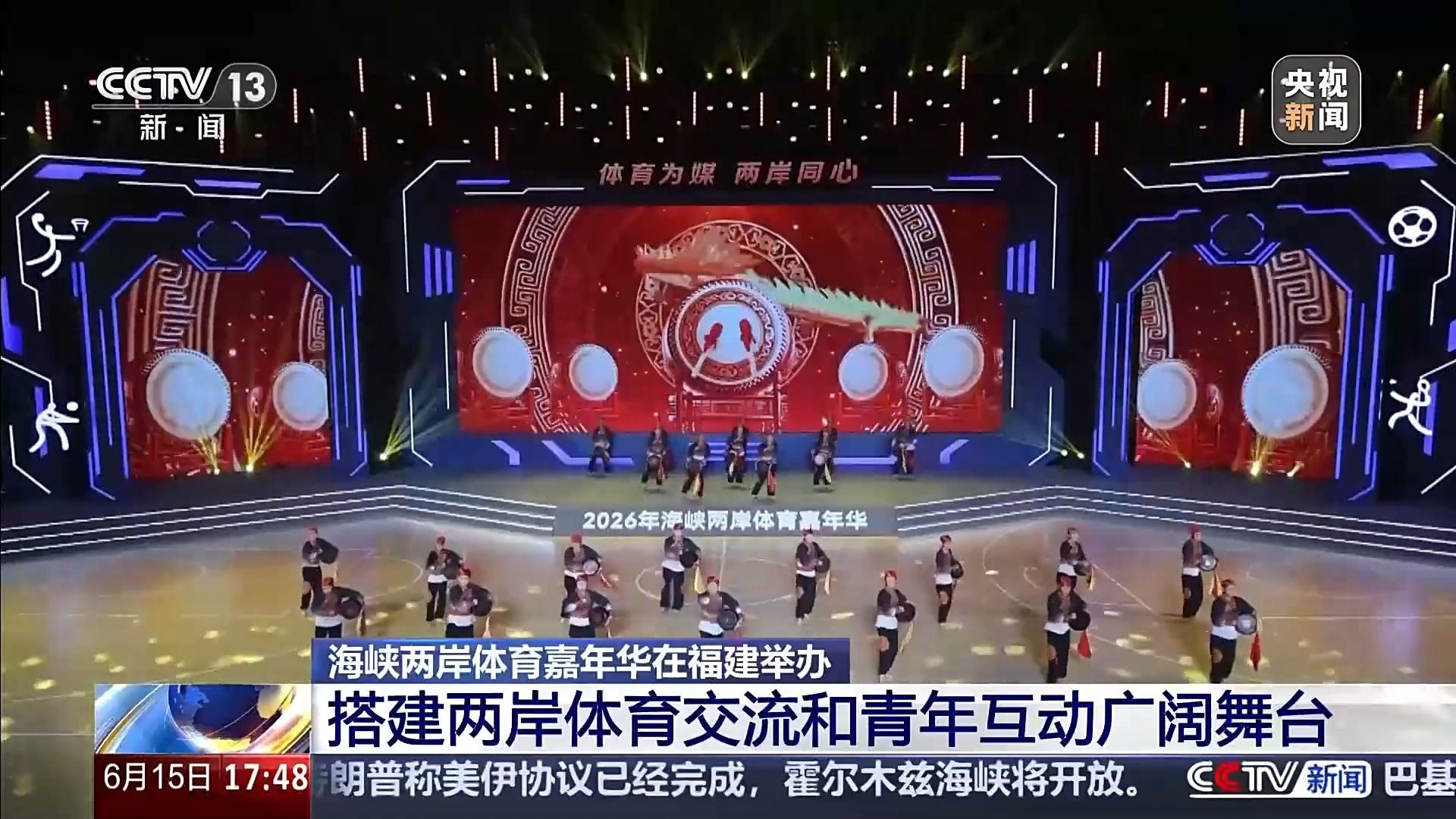 作为今年海峡论坛的重要活动之一,2026年海峡两岸体育嘉年华在福建厦门举行。本届嘉年华以“体育为媒 两岸同心”为主题,将举办44项精品赛事活动,涵盖棒球、篮球、羽毛球、龙舟、路跑等多个项目,预计带动各
...[详细]
作为今年海峡论坛的重要活动之一,2026年海峡两岸体育嘉年华在福建厦门举行。本届嘉年华以“体育为媒 两岸同心”为主题,将举办44项精品赛事活动,涵盖棒球、篮球、羽毛球、龙舟、路跑等多个项目,预计带动各
...[详细]
-
 湖北日报讯 记者龚雪、通讯员胡梦先)“新厂刚落成,就签下国际大单!”6月13日,湖北广济新能船业集团有限公司董事长陶勇军介绍,该公司已与来自阿联酋迪拜的世界知名船舶运输公司EMARAT MARITIM
...[详细]
湖北日报讯 记者龚雪、通讯员胡梦先)“新厂刚落成,就签下国际大单!”6月13日,湖北广济新能船业集团有限公司董事长陶勇军介绍,该公司已与来自阿联酋迪拜的世界知名船舶运输公司EMARAT MARITIM
...[详细]
-
 湖北日报讯 记者胡声明、通讯员李慧玺)隧道锚单缆拉力达5万吨,世界第一!6月15日,宜昌城西高速公路控制性工程南津关长江大桥迎来重大节点,大桥北岸隧道锚正式进洞施工。隧道锚是南津关长江大桥核心承重结构
...[详细]
湖北日报讯 记者胡声明、通讯员李慧玺)隧道锚单缆拉力达5万吨,世界第一!6月15日,宜昌城西高速公路控制性工程南津关长江大桥迎来重大节点,大桥北岸隧道锚正式进洞施工。隧道锚是南津关长江大桥核心承重结构
...[详细]
-
 近日,网传6月1日疲劳驾驶新规落地后,网约车司机每日仅可跑八小时的消息飞速走红,引发繁多网友热议。这项新规出自《机动车驾驶人疲劳驾驶认定规则》。对此相关部门作出澄清,该说法属于典型误读。这份认定规则主
...[详细]
近日,网传6月1日疲劳驾驶新规落地后,网约车司机每日仅可跑八小时的消息飞速走红,引发繁多网友热议。这项新规出自《机动车驾驶人疲劳驾驶认定规则》。对此相关部门作出澄清,该说法属于典型误读。这份认定规则主
...[详细]
-
 >在公司开业这样一个充满期望与活力的时刻,送上一份精心挑选的礼物表达祝贺是许多人的选择。而鲜花果篮作为一种兼具美观与实用的礼品,其是否适合在公司开业场合赠送,需要从多个角度来分析。对于纯商务场合,传统
...[详细]
>在公司开业这样一个充满期望与活力的时刻,送上一份精心挑选的礼物表达祝贺是许多人的选择。而鲜花果篮作为一种兼具美观与实用的礼品,其是否适合在公司开业场合赠送,需要从多个角度来分析。对于纯商务场合,传统
...[详细]